Otherwise, please select your country so we can show you products & currency for your location
The content of our website is always available in English and partly in other languages. Choose your preferred language and we will show you the content in that language, if available.
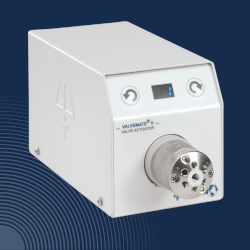
When performing high performance liquid chromatography (HPLC), efficiency is key to get the most throughput out of your instruments. Instead of purchasing additional instrumental setups, there are several ways to increase the efficiency of a single instrument. Switching valves, like the Gilson VALVEMATE® II Valve Actuator, can allow for the connection of multiple columns for column switching to expand what is possible on a single system alone.
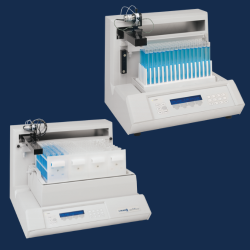
Peak-based fraction collection has the advantage that it’s based on real-time information. Your detector reveals a peak of interest, and the peak meets the criteria for collection. However, your molecules of interest are in the detector when you see the signal, and they need to pass through more tubing and parts before they can be collected. So how do you know when it is best to collect your sample? By knowing the fraction delay time.
Fraction collection can be conducted in a variety of manners. Most commonly, however, fractions are collected either based on a simple function of time or more complex parameters set off by the signals from your detectors. Learn more in our helpful video, which highlights 8 common questions about fraction collection.
Preparative high performance chromatography (prep HPLC or LC) plays a crucial role in many industries. It is used to isolate and purify desired compounds, removing impurities and contaminants that can affect the quality and performance of the end product. In this video, we answer your questions about prep HPLC and how it can fit into your lab's purification workflows.
There are many different chromatography techniques, but which is right for your experiment? This video will give an overview of the main differences between analytical and preparative chromatography and help guide you to the technique that is best for your lab's purification research.
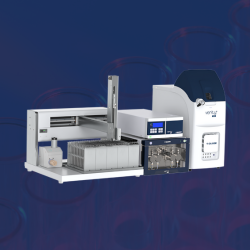
In high performance liquid chromatography (HPLC), the selection of an appropriate mode of detection is vital to the success of any separation. To this end, there are numerous choices one might consider when configuring a new HPLC setup. Mass spectrometry (MS) is an alternative method of detection and identification that is much more robust than UV. Here, we describe how the VERITY 1920 Mass Spectrometer allows for MS detection capabilities at an affordable price for HPLC fraction collection.
Fractionation, or the separation of a mixture of molecules into different parts or “fractions,” helps scientists understand and/or use a complex solution. Collecting and isolating individual fractions from a mixture can enable many downstream applications as specific molecules can be separated based on physical and chemical properties. In this article, we explore the basics of fraction collection, including applications, parameters, and available solutions for your lab.
Oligonucleotides are core components of many molecular biology tools available today, including antisense gene therapy and primers for qPCR. Depending on the application, highly pure oligos are typically required, or experiments lack reproducibility — and for applications such as therapeutics, the consequences can be dire. To ensure that oligos are at the desired level of purity for their application, you need to use effective purification techniques. HPLC is one of the most effective and versatile approaches available for oligo purification, and in this article, we cover five tips to help improve your HPLC workflow to help you achieve highly pure oligos every time.
Synthetic oligonucleotides (oligos) are central to many cutting-edge biochemical applications across research and therapeutics. While solid-phase synthesis typically yields oligos with relatively high purity, they usually need further purification to avoid unintended side-reactions and interferences in downstream applications. Preparative HPLC is the preferred method for small to medium length oligos (10-60 bp). To increase productivity and maximize the profitability of your oligo research and development, finding the optimal LC purification platform is crucial.