Otherwise, please select your country so we can show you products & currency for your location
The content of our website is always available in English and partly in other languages. Choose your preferred language and we will show you the content in that language, if available.
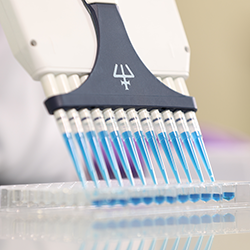
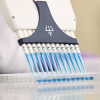
Pipette tips play a critical role in liquid handling accuracy and reproducibility. Learn how tip quality, fit, and material impact experimental results across manual and automated workflows.
Choosing the right pipette tip is essential for accurate and reproducible laboratory results. Learn the four key factors to consider – materials, purity, fit, and traceability – when selecting pipette tips for your experiments.
What if automating your workflow didn’t mean changing everything you trust? With PIPETMAX®, labs can streamline qPCR, ELISA, and normalization tasks using the same reliable Gilson pipette tips they already depend on, bringing precision, speed, and simplicity to automation without the hidden costs. Discover how familiar tools can make automation effortless.
Peak-based fraction collection has the advantage that it’s based on real-time information. Your detector reveals a peak of interest, and the peak meets the criteria for collection. However, your molecules of interest are in the detector when you see the signal, and they need to pass through more tubing and parts before they can be collected. So how do you know when it is best to collect your sample? By knowing the fraction delay time.
Chromatography plays a crucial role in the chemical and pharmaceutical industries. New drug innovation, pilot studies, and process development are a few examples of how it's used. Preparative chromatography is a method used to separate and purify target compounds derived from complex mixtures so that they can be used in other applications. When conducting these separations, there are certain dependencies that must be considered as scientists develop their methods. In this video, you'll learn more about these interdependent relationships involved in chromatographic separations.
Fraction collection can be conducted in a variety of manners. Most commonly, however, fractions are collected either based on a simple function of time or more complex parameters set off by the signals from your detectors. Learn more in our helpful video, which highlights 8 common questions about fraction collection.
Preparative high performance chromatography (prep HPLC or LC) plays a crucial role in many industries. It is used to isolate and purify desired compounds, removing impurities and contaminants that can affect the quality and performance of the end product. In this video, we answer your questions about prep HPLC and how it can fit into your lab's purification workflows.
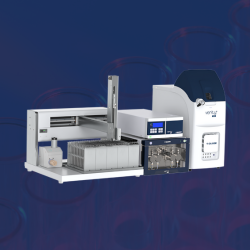
In high performance liquid chromatography (HPLC), the selection of an appropriate mode of detection is vital to the success of any separation. To this end, there are numerous choices one might consider when configuring a new HPLC setup. Mass spectrometry (MS) is an alternative method of detection and identification that is much more robust than UV. Here, we describe how the VERITY 1920 Mass Spectrometer allows for MS detection capabilities at an affordable price for HPLC fraction collection.
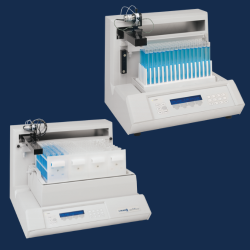
Fractionation, or the separation of a mixture of molecules into different parts or “fractions,” helps scientists understand and/or use a complex solution. Collecting and isolating individual fractions from a mixture can enable many downstream applications as specific molecules can be separated based on physical and chemical properties. In this article, we explore the basics of fraction collection, including applications, parameters, and available solutions for your lab.