Many sample types, such as those from the environment or food, undergo testing to detect contaminating residues such as pesticides, antibiotics, chlorinated hydrocarbons, and compounds of health concern. While the exact governmental regulations surrounding testing methods differ by country, gel permeation chromatography (GPC) is one of the routine methods used to clean up samples before analysis. As a routine step in residue testing, is often a part of the workflow to prepare samples before analysis by a variety of chromatography methods such as GC, HPLC, or LC/MS. GPC removes unwanted substances such as lipids, proteins, cell debris, pigments, humic acid, and sulfur, that can interfere with downstream chromatography steps used to detect the residues. Including GPC cleanup in residue testing can help make chromatography columns last longer, protect instrumentation, and improve residue detection accuracy.
Why Automate GPC Cleanup?
1. Increase Reproducibility and Reduce Operator Errors
Even the best technicians may make errors from time to time. Automation removes this error and increases reproducibility when processing numerous samples as GPC cleanup performed by different technicians might give slightly different results.
2. Free Up Scientist Time
While automating the GPC cleanup process itself doesn’t make the process from start to finish any quicker, it does free up the technician for other procedures. Since the technician doesn’t have to be there during the entire run, they can prepare the samples, queue them up on the machine, and leave. GPC cleanup systems, such as Gilson’s VERITY® GPC Cleanup System, allow users to load several samples at once in the beginning so multiple samples can be processed before the technician has to come back to retrieve collected fractions. While run times depend on the column used and the flow rate, it’s possible that all samples can be loaded onto the system at the end of the day and processed overnight.
3. Reduce Cost Per Test
While there is an initial cost investment in purchasing the instrument itself, the cost savings come into play during the runs as staff doesn’t need to be present. This can mean reducing your personnel budget or allowing them to complete other tasks during the GPC cleanup runs. Because automation eliminates human errors, automated GPC cleanup means reduced cost of solvent and samples because tests don’t have to be repeated.
4. Reduce Human Exposure to Harmful Substances
As samples used in residue testing might be contaminated with some levels of harmful substances (ex: insecticides, nematicides, rodenticides, heavy metals, etc.), automation can help shield technicians from exposure to these substances.
When Would You Want to Do Manual Vs. Automated GPC Cleanup?
Imagine a completely manual GPC cleanup process: a technician needs to prepare all the samples, inject them into the instrument, monitor the signal produced from the detector, and collect the samples at the appropriate time. This manual process would be acceptable if you need to process a few samples or need GPC cleanup for the short term.
However, as residue labs process a high number of samples, GPC cleanup done manually would become a highly repetitive and laborious process. If you routinely need to process over 50 samples, it’s best to consider automating, particularly if you will be needing GPC cleanup in the long term.
With the help of automation, many of these manual steps can be simplified for the user. Automation can inject the sample onto the instrument and collect fractions based on the detector’s signal without human intervention. All a user has to do is prepare and load the sample, indicate collection criteria in the software, and come back to retrieve the fractions collected.
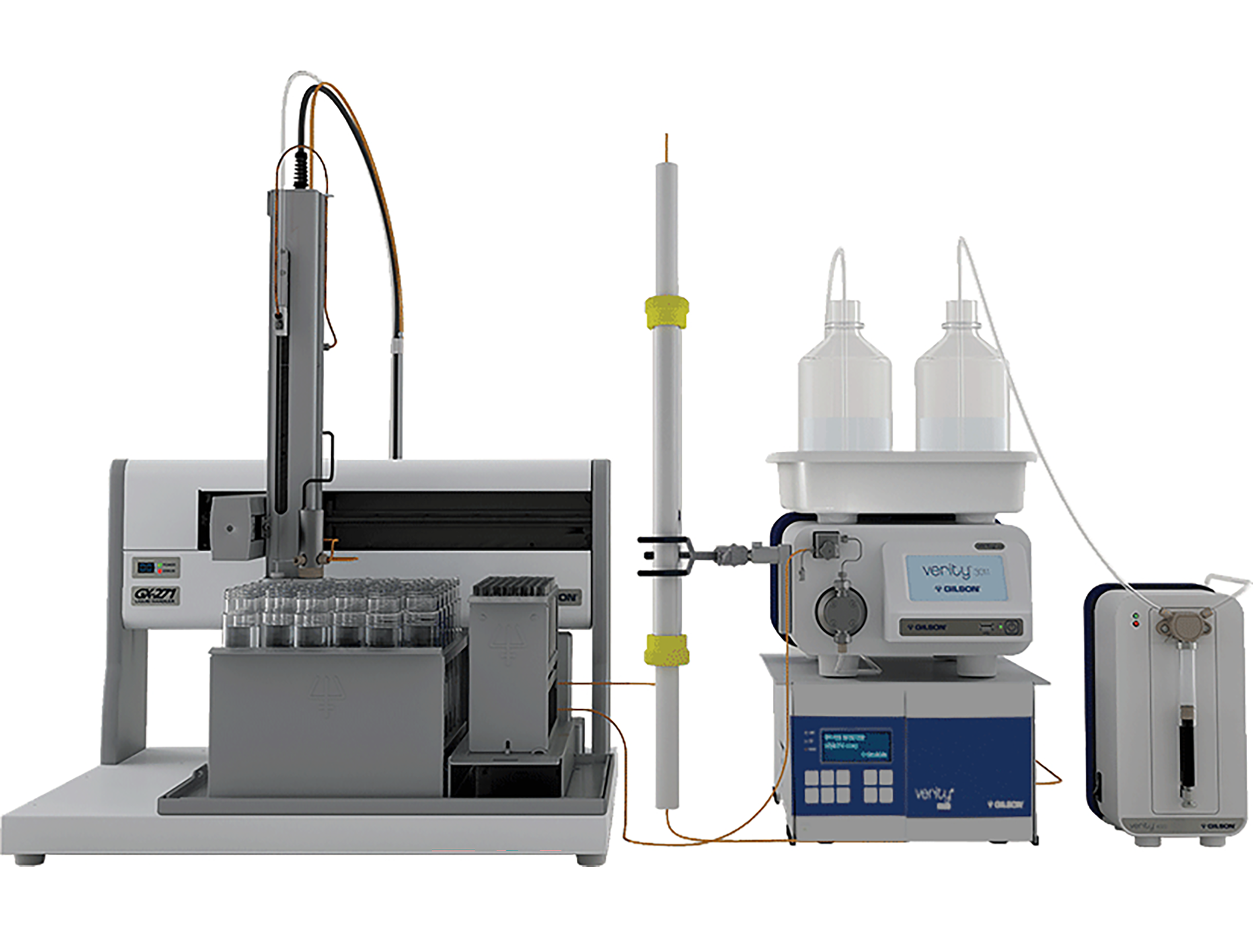
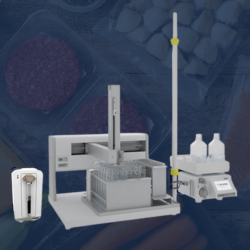
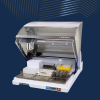
Figure 1. VERITY® GPC Cleanup System
Automated GPC with Gilson’s VERITY® GPC Cleanup System
An application of GPC cleanup is the analysis of plastic additives in food products. Many chemicals are used to enhance the properties of plastics, but it’s possible that these additives end up in food products. As an example of how automated GPC systems can be used, we used Gilson’s GX-271 GPC Cleanup System to separate plastic additives from an edible oil sample. This analysis, which is described in our application note Clean‐up of Plastics Additives from Edible Oils Using Gel Permeation Chromatography (GPC), finds that GPC cleanup is an effective way to separate phthalates and other plastic additives from fatty foods prior to downstream analysis.
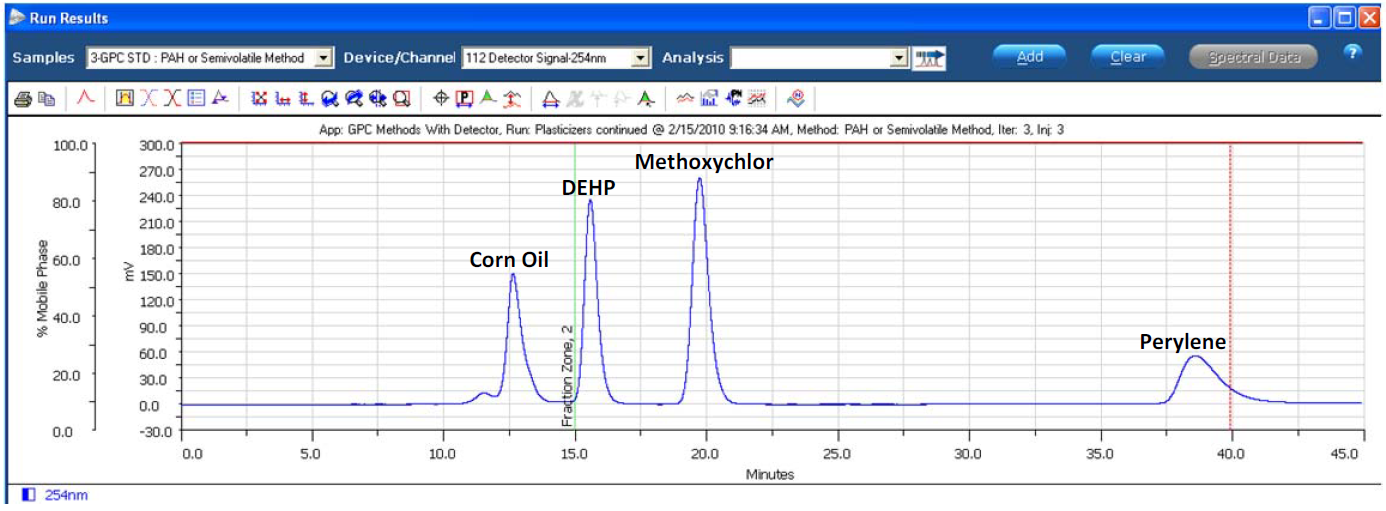
Figure 2. Chromatogram of a US EPA Method 3640A Calibration Standard. Retention Times: Corn Oil = 12.6 min, DEHP = 15.6 min, Methoxychlor = 19.7 min and Perylene = 38.6 min. Download our application note for more.
Gilson’s VERITY® GPC Cleanup System has everything you need to set up your GPC cleanup process and step away. The high-capacity nature of this system means that users can load up to 80 samples at once and collect up to 36 fractions without human intervention. This system can accommodate a variety of racks and vessels to collect fractions of interest. To make it even easier, our TRILUTION® LC Software comes with pre-programmed methods specific to GPC cleanup. Learn more about our VERITY® GPC Cleanup System here and add this system to your lab.